Quick Answer
Can you install an awning yourself?
Small proprietary shade products may be marketed for DIY fitting, but larger awnings introduce structural fixing, height, weather, electrical and approval risks. Permanent outdoor structures benefit from professional assessment.
For a solution grounded in the actual property, explore the professional awning installation process. A useful project discussion should connect the intended use with dimensions, exposure, structure, drainage, finish and any required approvals.
Where DIY stops being economical
Start by checking weight, projection and wind loading on fixings. Then consider condition of masonry, fascia or support structure; together these factors show how the complete installation will perform in its intended position.
Weight, projection and wind loading on fixings
Condition of masonry, fascia or support structure
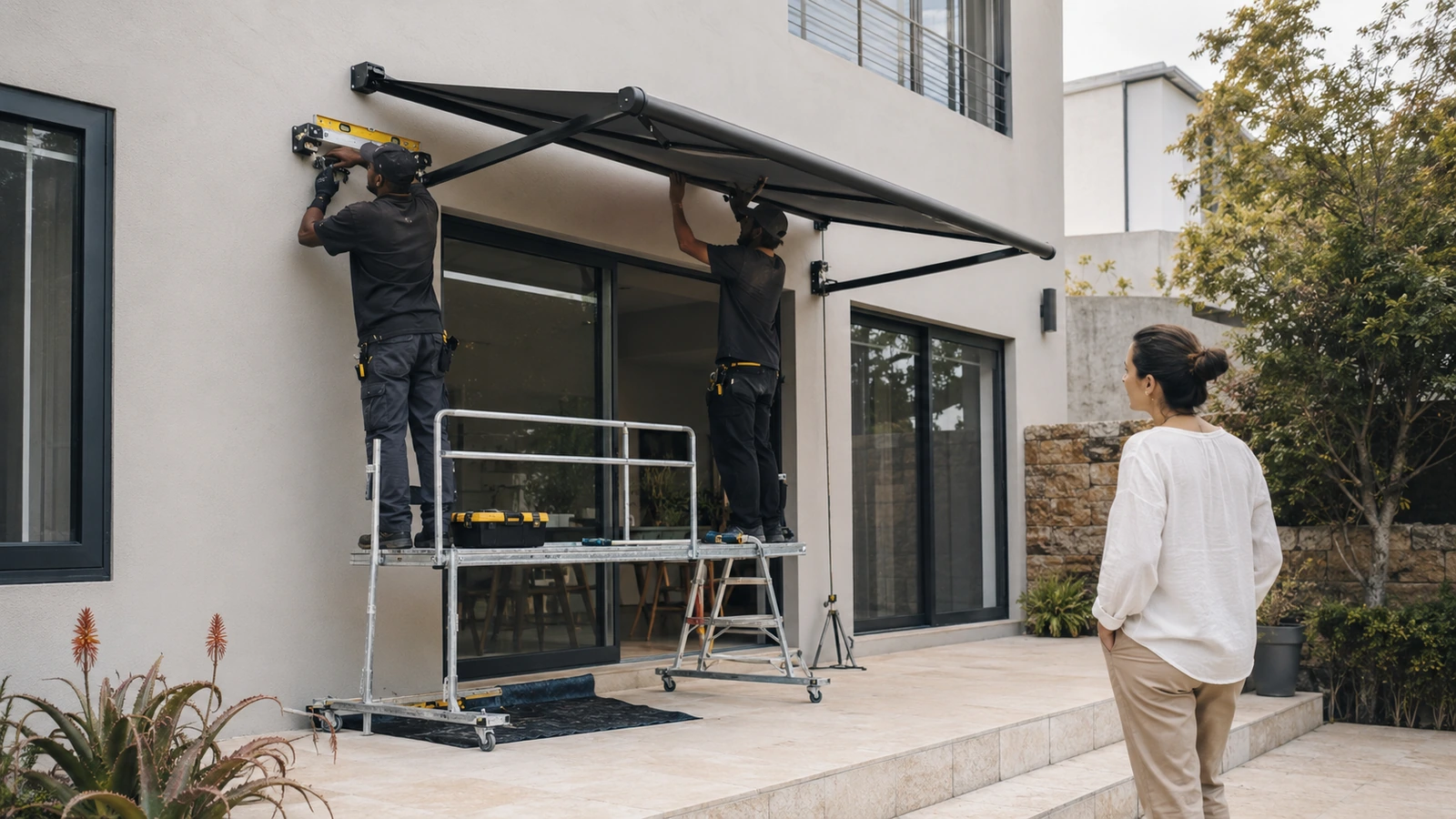
Safe work at height and suitable equipment
Drainage, electrical work and approval obligations
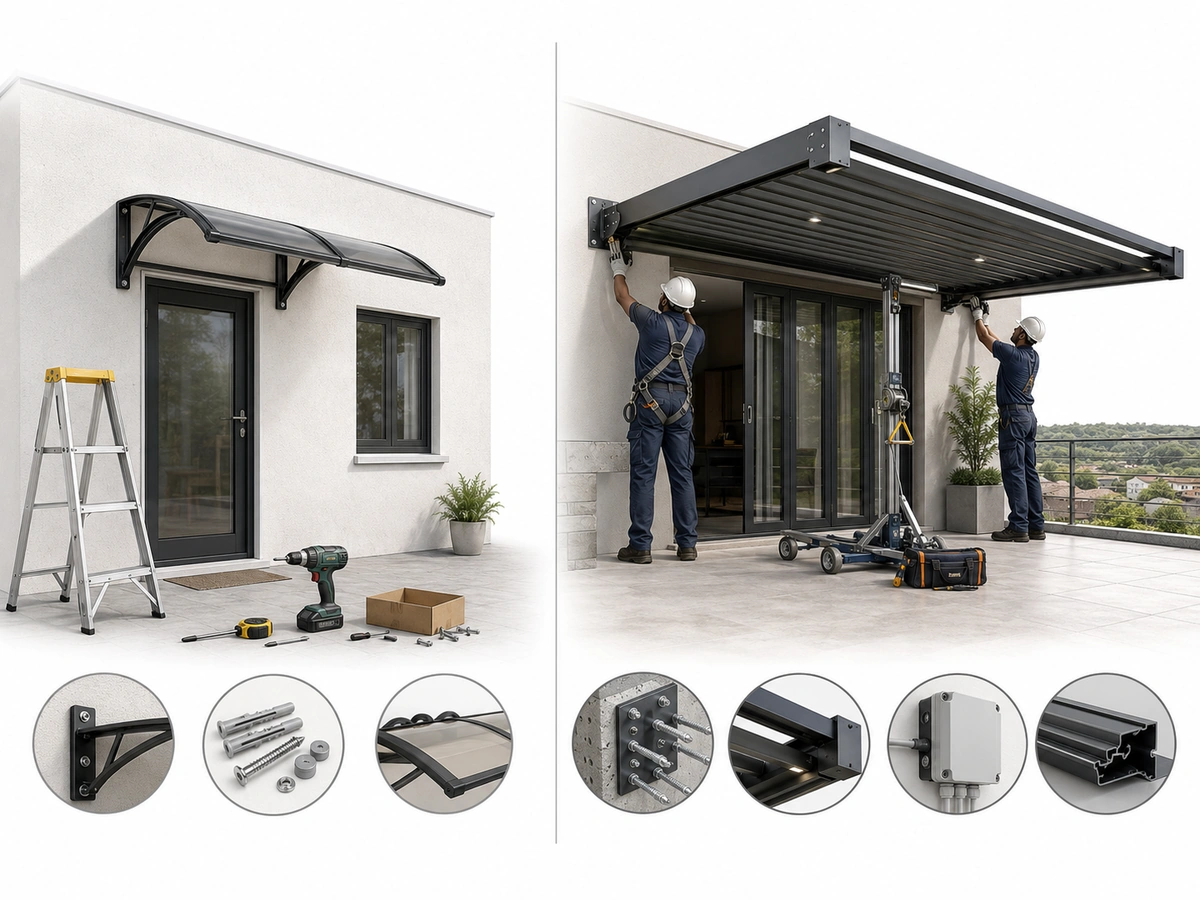
Assessing the fixing, the load and the liability
Before requesting a quotation, record do not assume supplied fixings suit every wall and locate concealed services before drilling. These topic-specific details make proposals easier to compare and reduce assumptions.
- Do not assume supplied fixings suit every wall
- Locate concealed services before drilling
- Use qualified trades for regulated work
- Obtain professional advice when structural behaviour is uncertain
Being honest about the scope before starting
The part that catches people out is rarely the assembly — it is the fixing into the building and the handling of large, awkward sections at height. Before committing, establish what the wall or roof structure actually is behind the plaster, because that determines whether a standard fixing is adequate or not.
Common Questions
DIY vs Professional Awning Installation FAQ
What is the main risk of installing an awning yourself?
The fixing. An awning transfers wind uplift into a small number of anchor points, and a fixing that seems solid on installation day can fail in the first real storm. Getting that judgement wrong is not a cosmetic problem — it is a safety one.
Does self-installation affect the guarantee?
It usually affects the installation guarantee, and it can affect the product guarantee where the manufacturer requires approved installation. Confirm the position before buying a supply-only unit on the assumption that cover is unchanged.
Are there jobs where DIY is reasonable?
Small, light, freestanding or window-scale units on a sound wall are within reach of a competent DIYer. Large spans, motorised systems, anything requiring work at height, and anything needing approval or engineering input are a different proposition.