Quick Answer
What makes one awning fabric better than another?
A suitable awning fabric balances UV resistance, colourfastness, dimensional stability, water behaviour and cleanability. The strongest specification is the one matched to exposure and operating method.
For a solution grounded in the actual property, explore window shading and awning options. A useful project discussion should connect the intended use with dimensions, exposure, structure, drainage, finish and any required approvals.
UV performance, colourfastness and water behaviour
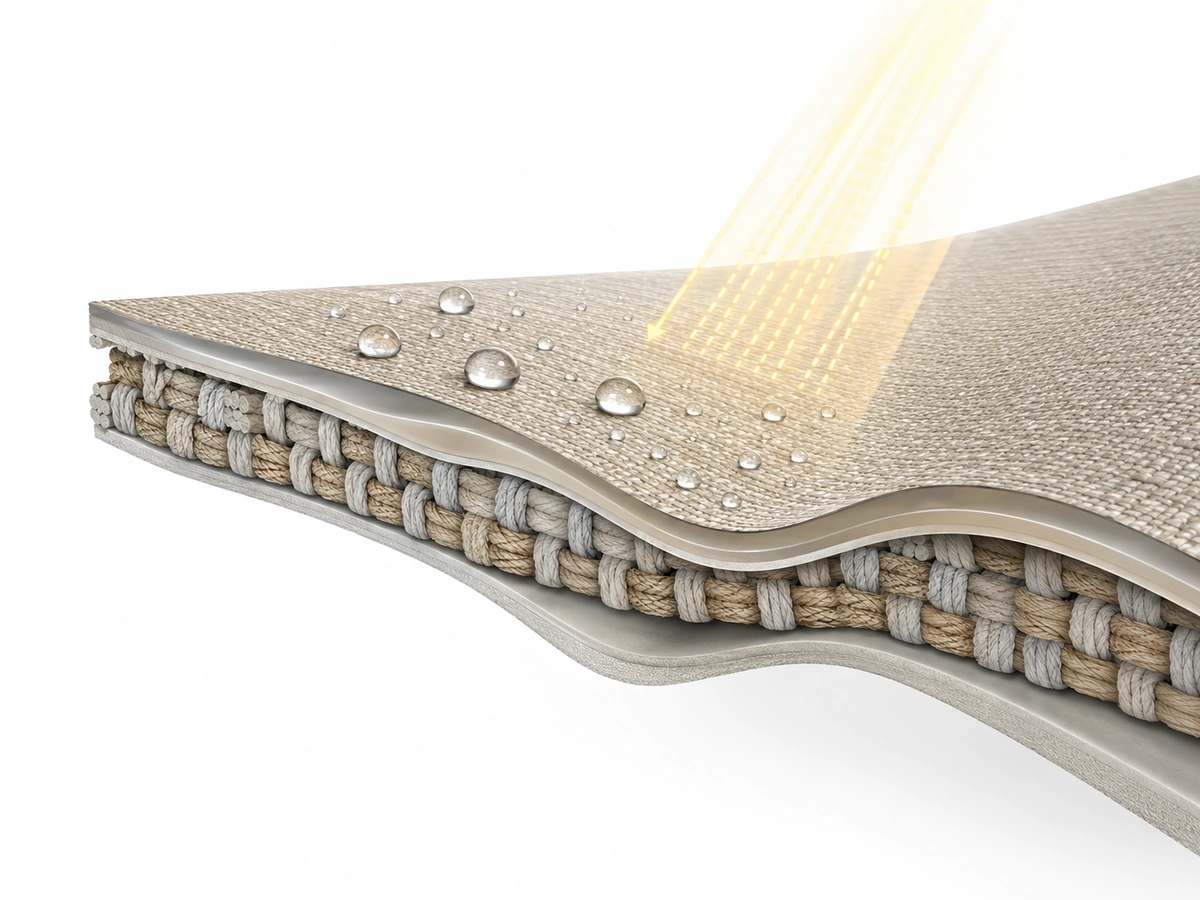
Start by checking uV and colourfastness information from the supplier. Then consider woven acrylic, polyester or coated fabric construction; together these factors show how the complete installation will perform in its intended position.
UV and colourfastness information from the supplier
Woven acrylic, polyester or coated fabric construction
Water resistance versus breathability
Tension, seams and suitability for retractable use
Judging samples before you commit
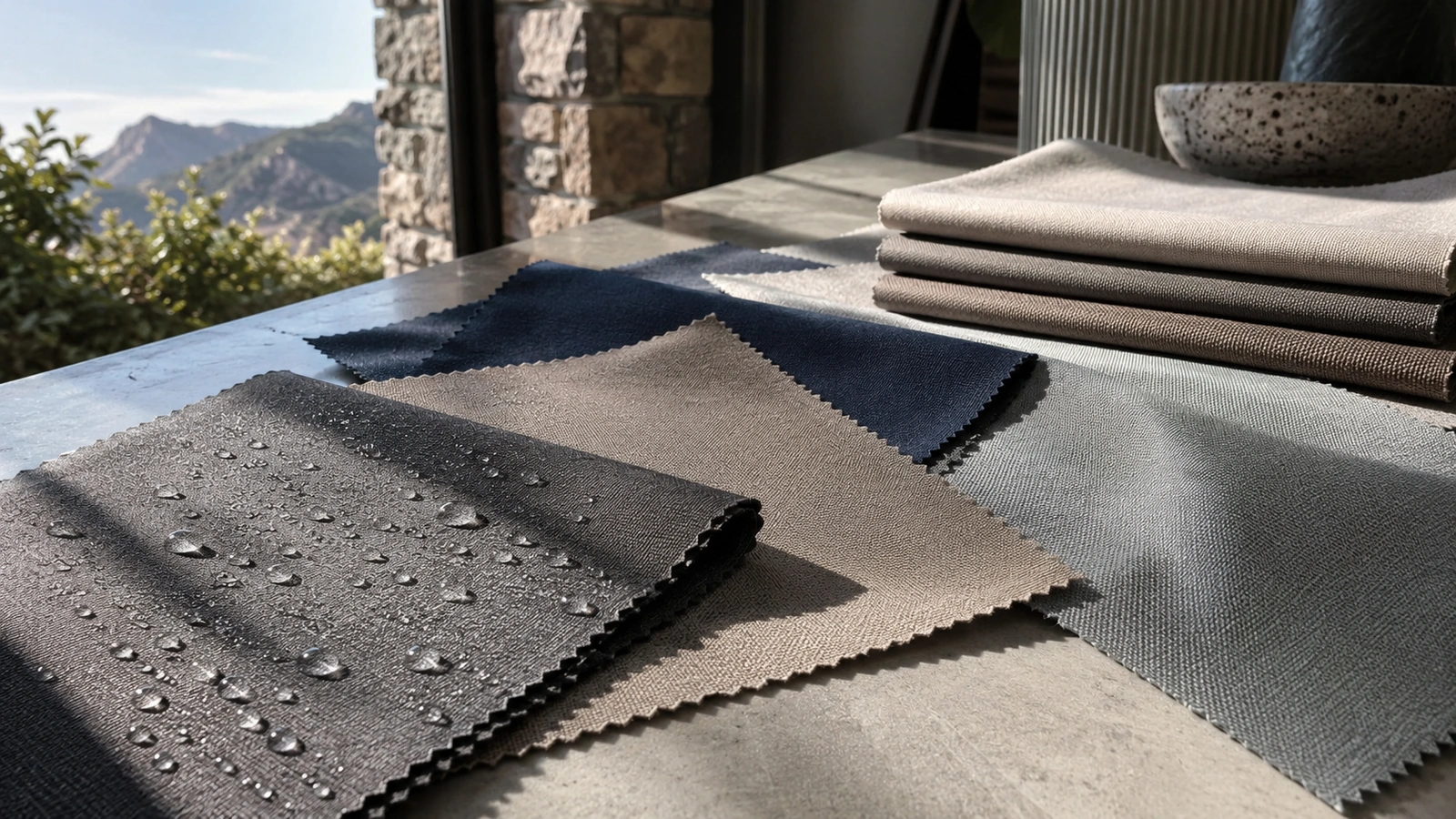
Before requesting a quotation, record request a physical sample before choosing colour and check both face and underside appearance. These topic-specific details make proposals easier to compare and reduce assumptions.
- Request a physical sample before choosing colour
- Check both face and underside appearance
- Ask how the fabric should be cleaned
- Confirm the product warranty and its exclusions
Requesting fabric information that is actually comparable
Ask for the fabric brand and range name, not just a colour. Two fabrics that look identical on a small swatch can behave very differently after a few summers of direct Highveld UV. Request a sample large enough to hold up against the sky, and look at it outdoors — showroom lighting flattens the difference between solution-dyed and surface-printed material.
Common Questions
Awning Fabrics and UV Ratings FAQ
What does solution-dyed mean, and does it matter?
In a solution-dyed fabric the colour is added to the fibre while it is being made, so the pigment runs all the way through rather than sitting on the surface. Under sustained South African UV that generally translates into slower fading. It is one of the more meaningful things to ask about.
Does a waterproof awning fabric exist?
Fabrics range from water-repellent to fully waterproof, and the two are often used loosely in sales conversations. A repellent fabric sheds light rain at an angle but will wet through in sustained rain, particularly where it is flat. If rain cover is essential, confirm which one you are being quoted.
Why does the same colour look different on two quotations?
Because the colour name is not standardised between fabric ranges. Always compare the brand, range and colour reference together, and confirm from a physical sample rather than a printed brochure or a screen.