Quick Answer
Are automatic awning sensors worth adding?
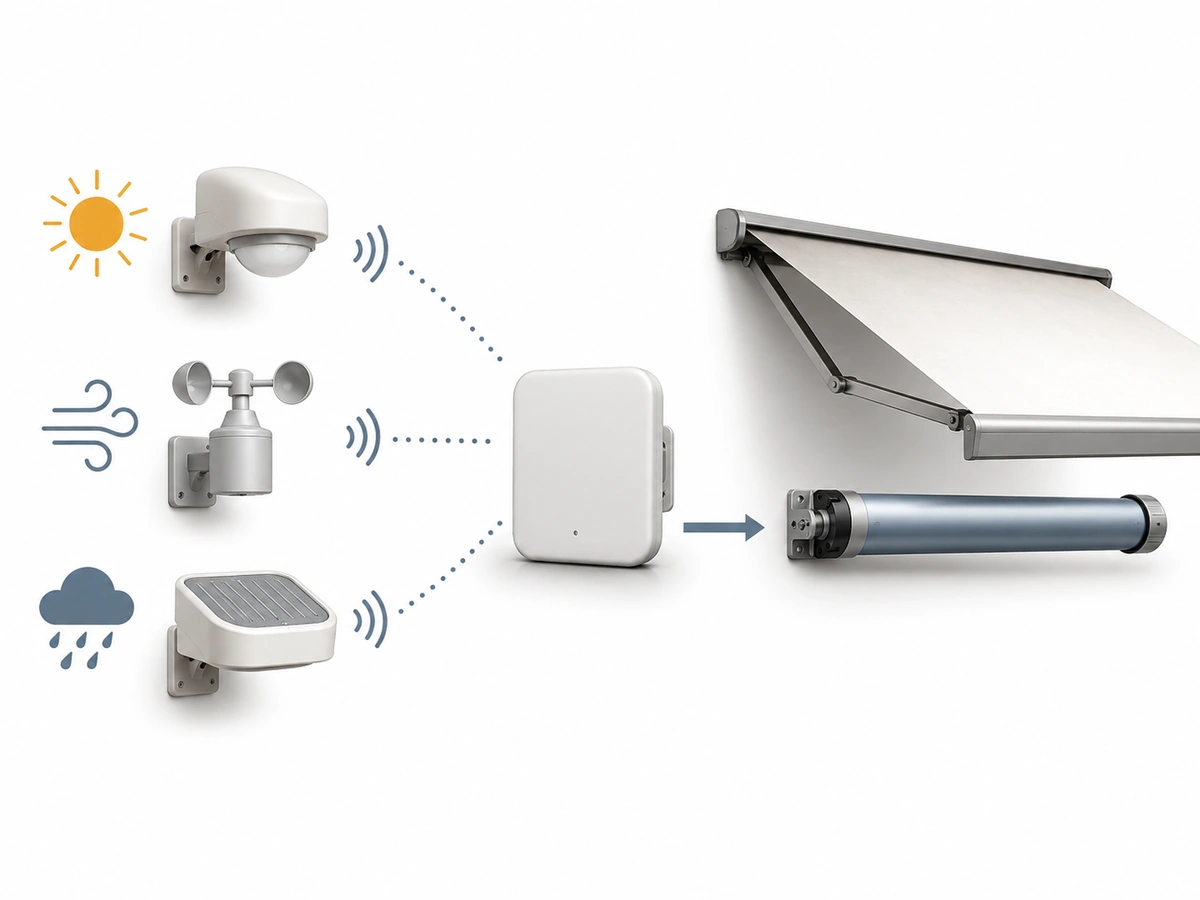
Weather sensors can automate selected awning responses, but they do not make a system suitable for every condition. Sensor position, thresholds, compatibility and owner understanding are essential.
For a solution grounded in the actual property, explore automated louvre awning systems. A useful project discussion should connect the intended use with dimensions, exposure, structure, drainage, finish and any required approvals.
Sensor type, placement and threshold settings
Start by checking which weather event the sensor detects. Then consider sensor location and exposure to representative conditions; together these factors show how the complete installation will perform in its intended position.
Which weather event the sensor detects
Sensor location and exposure to representative conditions
Compatible motors, controls and response logic
Override behaviour during power or signal loss
Deciding what should happen automatically
Before requesting a quotation, record agree on the intended automated response and avoid sheltered sensor positions. These topic-specific details make proposals easier to compare and reduce assumptions.
- Agree on the intended automated response
- Avoid sheltered sensor positions
- Test the system during commissioning
- Treat automation as assistance, not a substitute for responsible operation
Getting the automation brief right
Decide which single behaviour matters most — usually retracting or closing in wind — and specify that reliably before adding anything else. Note where a sensor could be mounted so that it reads the conditions at the awning rather than in a sheltered corner, because a badly placed sensor is worse than none at all.
Common Questions
Sun, Wind and Rain Sensors for Awnings FAQ
Does a wind sensor guarantee the awning will not be damaged?
No. It reduces the risk by retracting or closing at a set threshold, but it depends on the sensor reading true conditions, on the threshold being sensible and on power being available. Treat it as a useful safeguard rather than a substitute for retracting the awning when serious weather is expected.
Where should a wind sensor be mounted?
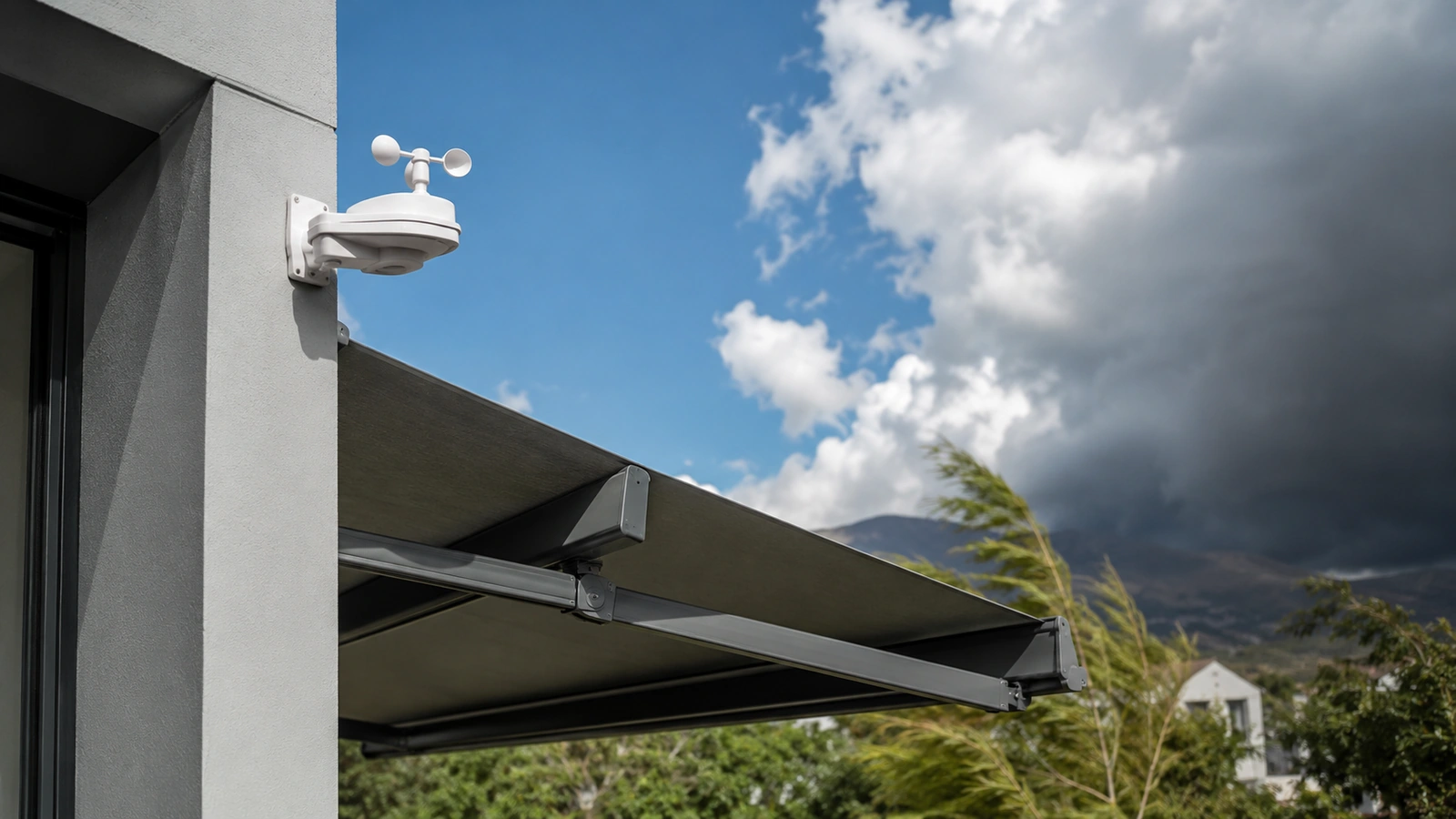
Where it experiences what the awning experiences — at or near the outer edge, clear of walls and roof overhangs that shelter it. A sensor tucked against the building consistently under-reads and will not trigger when it should.
Can a rain sensor cause nuisance operation?
It can, particularly if the threshold is low and the awning retracts during light drizzle when you would rather it stayed out. Ask whether thresholds are adjustable and whether manual override is straightforward before adding one.