

Quick Answer
Where does a fixed canopy make sense?
A fixed canopy is a permanently projected cover over an entrance, walkway, window or compact outdoor area. Its simple geometry can provide dependable localised shelter when correctly supported and drained.
For a solution grounded in the actual property, explore fixed roof and awning options. A useful project discussion should connect the intended use with dimensions, exposure, structure, drainage, finish and any required approvals.
What separates a good canopy from a leaky one
Start by checking required rain cover and the direction of runoff. Then consider frame material, roof skin and corrosion protection; together these factors show how the complete installation will perform in its intended position.
Required rain cover and the direction of runoff
Frame material, roof skin and corrosion protection
Clearance above doors and windows
How the canopy connects to the existing building
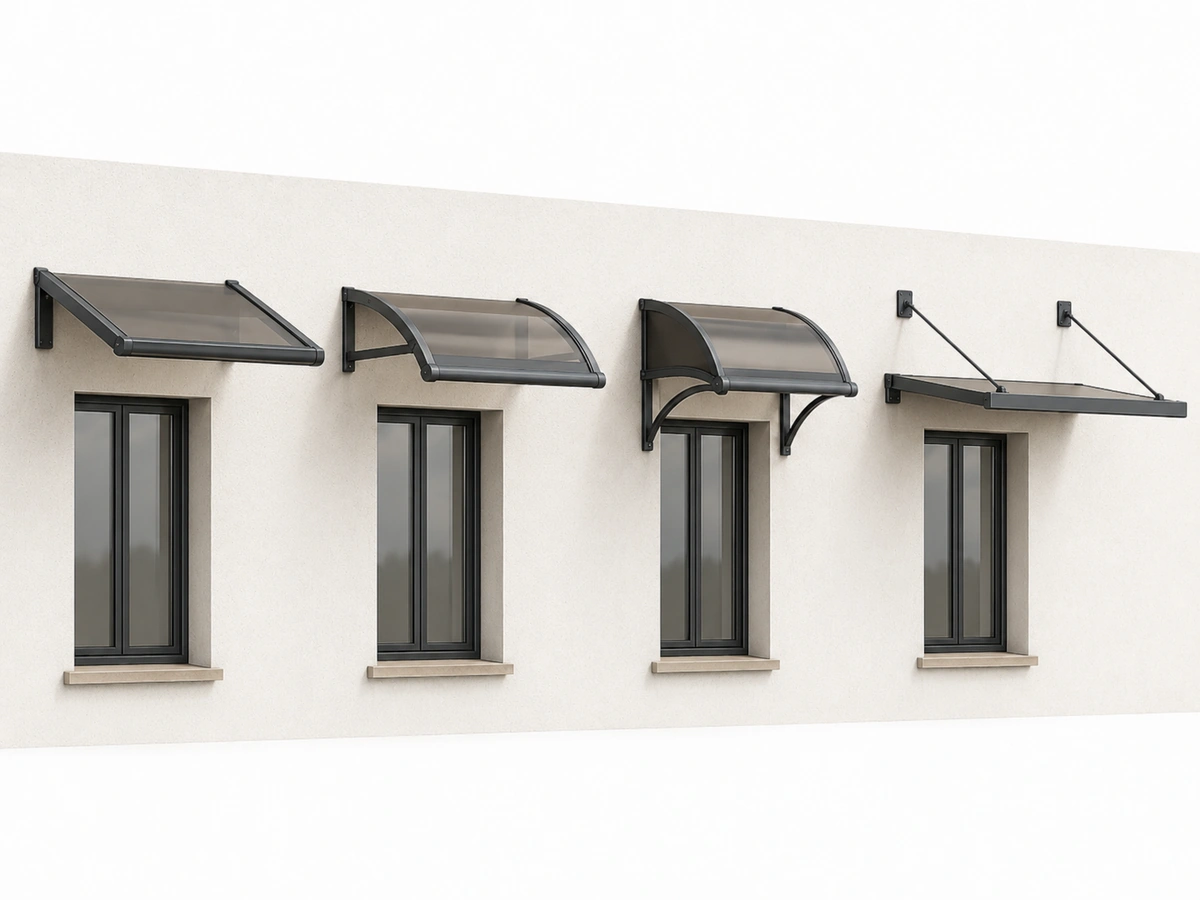
Getting the fall and clearance right
Before requesting a quotation, record confirm that water will discharge away from entrances and keep supports clear of circulation routes. These topic-specific details make proposals easier to compare and reduce assumptions.
- Confirm that water will discharge away from entrances
- Keep supports clear of circulation routes
- Coordinate the canopy profile with the building
- Ask whether approval or structural input is required
Details to confirm before a canopy is manufactured
Canopies fail at the junction with the building far more often than in the middle. Photograph how the wall meets the roof above the proposed position, and note the existing flashing, gutter and any brickwork movement joint. Record the door or window height beneath, because head clearance is what usually forces a design change late.
Common Questions
Fixed Canopy Awnings FAQ
Where should water from a canopy discharge?
Away from the doorway and away from the building's foundations. A canopy that drips across an entrance in the rain has failed at its main job. Confirm at quotation stage whether the design uses a concealed gutter, a front lip with a downpipe, or a simple fall to one side.
Does a canopy need to be flashed into the wall?
Where the canopy abuts the building, yes. Without a properly detailed flashing, water tracks down the wall behind the structure and shows up inside as damp long before anyone connects it to the awning. Ask to see how the junction is detailed.
Can a canopy be fitted over an outward-opening door?
It can, provided the clearance is set from the top of the fully opened door rather than from the door frame. This is a common oversight — measure with the door open, and add allowance for the frame depth and any door closer.