Practical Guide
What Is a Louvre Awning?
A louvre awning is a framed roof system with parallel blades that rotate to manage sunlight, ventilation and rain cover. It suits patios where conditions change throughout the day.
Read guide
7 practical articles
The right awning type depends on what the area must do: create adjustable shade, keep out rain, protect a window, shelter a vehicle or enclose a patio edge. Start with the use of the space, then compare structure, weather performance and maintenance.
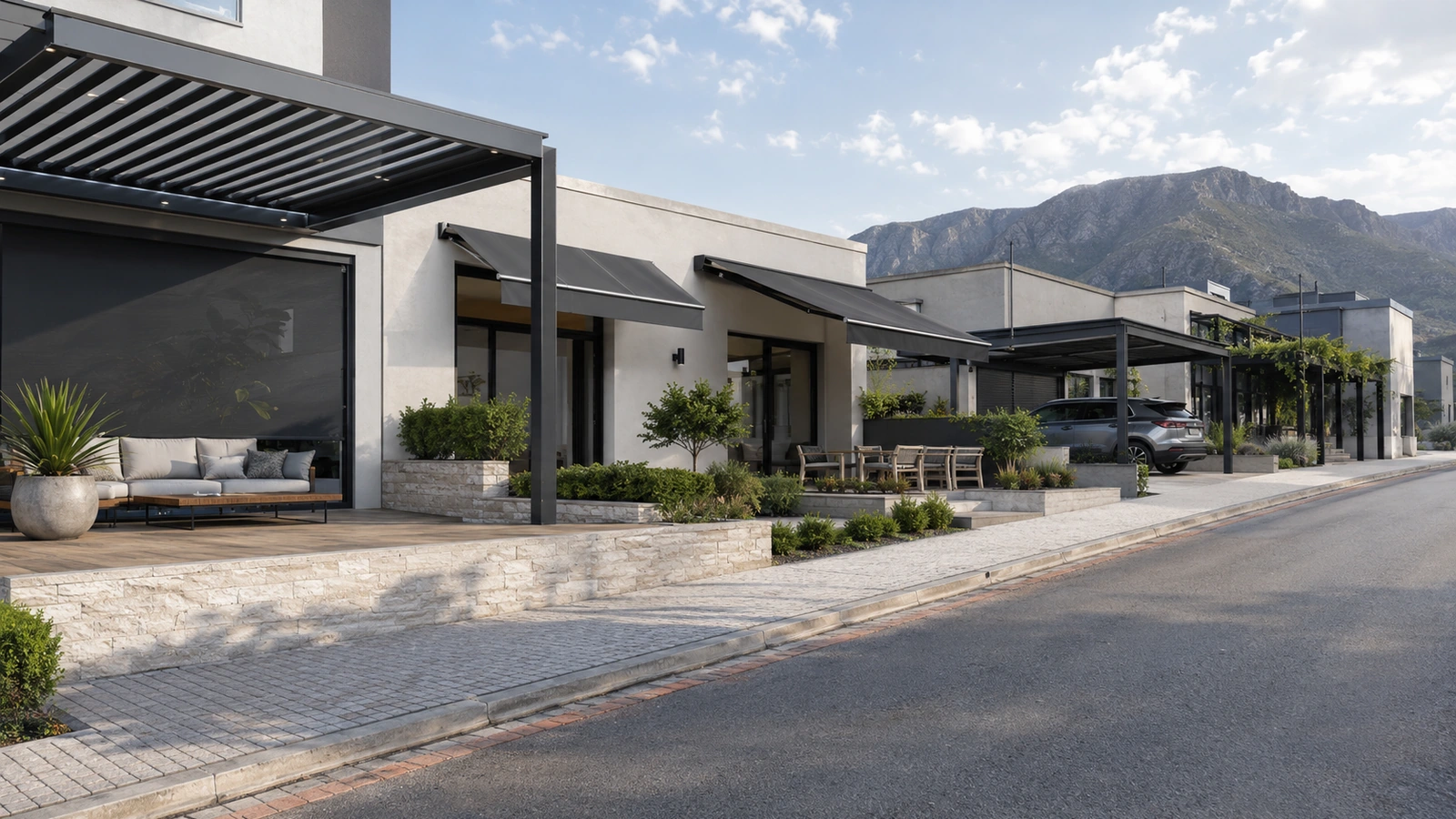
Awning Types Library
Practical Guide
A louvre awning is a framed roof system with parallel blades that rotate to manage sunlight, ventilation and rain cover. It suits patios where conditions change throughout the day.
Read guidePractical Guide
A folding-arm awning projects fabric outward without front posts and retracts against the wall when it is not needed. It is best treated as flexible sun protection rather than a permanent all-weather roof.
Read guidePractical Guide
A fixed canopy is a permanently projected cover over an entrance, walkway, window or compact outdoor area. Its simple geometry can provide dependable localised shelter when correctly supported and drained.
Read guidePractical Guide
A drop-arm awning shades a window with fabric held away from the glass, while an outdoor blind generally travels closer to the opening. The best choice depends on the sun angle, airflow and privacy required.
Read guidePractical Guide
A solid-roof carport prioritises rain, hail and sun protection, while a shade port primarily reduces solar exposure. Structure, drainage and the level of vehicle protection separate the two options.
Read guidePractical Guide
Pergolas create an architectural framework, patio covers create dependable overhead protection, and awnings can add fixed or adjustable shade. The terms overlap, so compare actual performance rather than labels.
Read guidePractical Guide
Zip screens and outdoor blinds manage low-angle sun, glare, wind and privacy at the open sides of a patio. They complement an overhead roof but do not replace its structural weather protection.
Read guide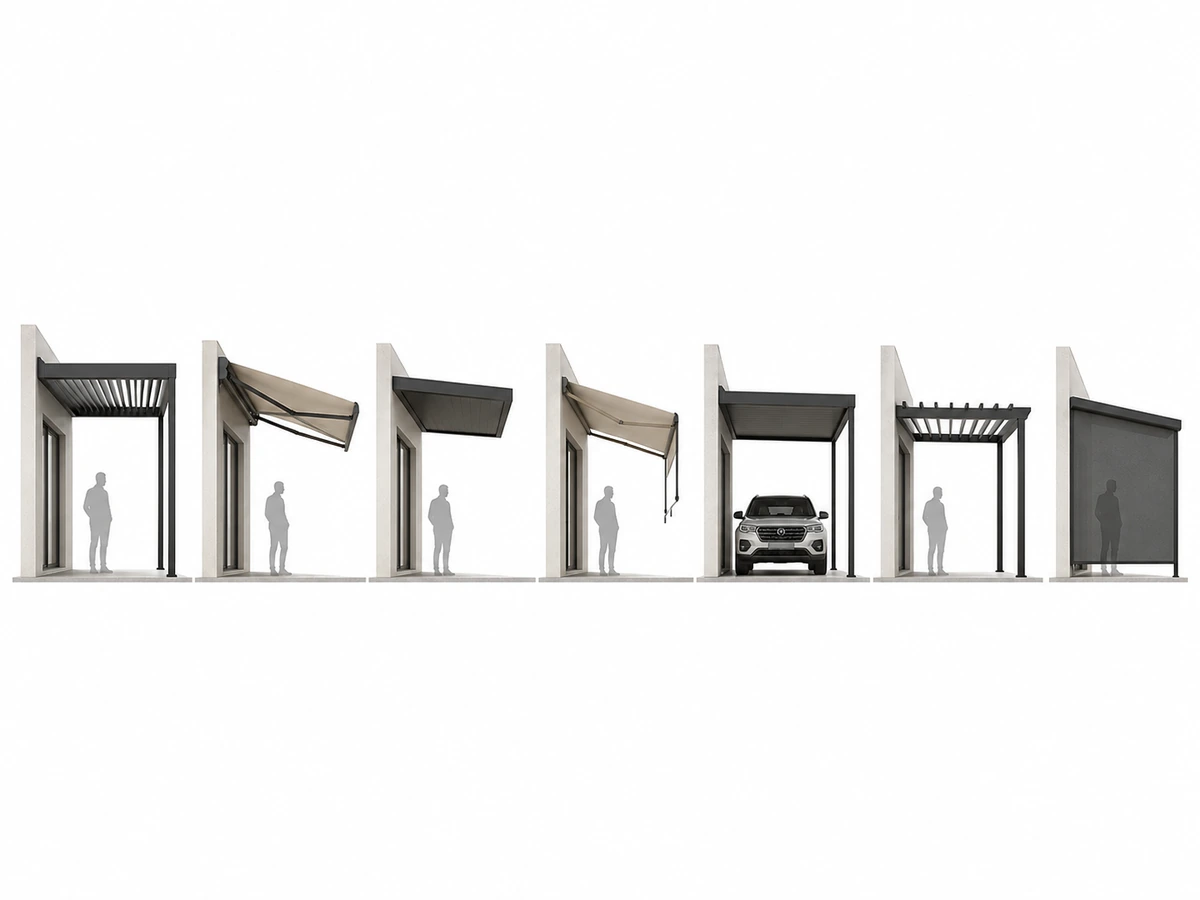
From Research to Scope
The right awning type depends on what the area must do: create adjustable shade, keep out rain, protect a window, shelter a vehicle or enclose a patio edge. Start with the use of the space, then compare structure, weather performance and maintenance.
When you have a clear brief, view Dan-Neil's outdoor-cover solutions or prepare photographs and approximate measurements for a project conversation.