Quick Answer
What does a louvre awning actually do?
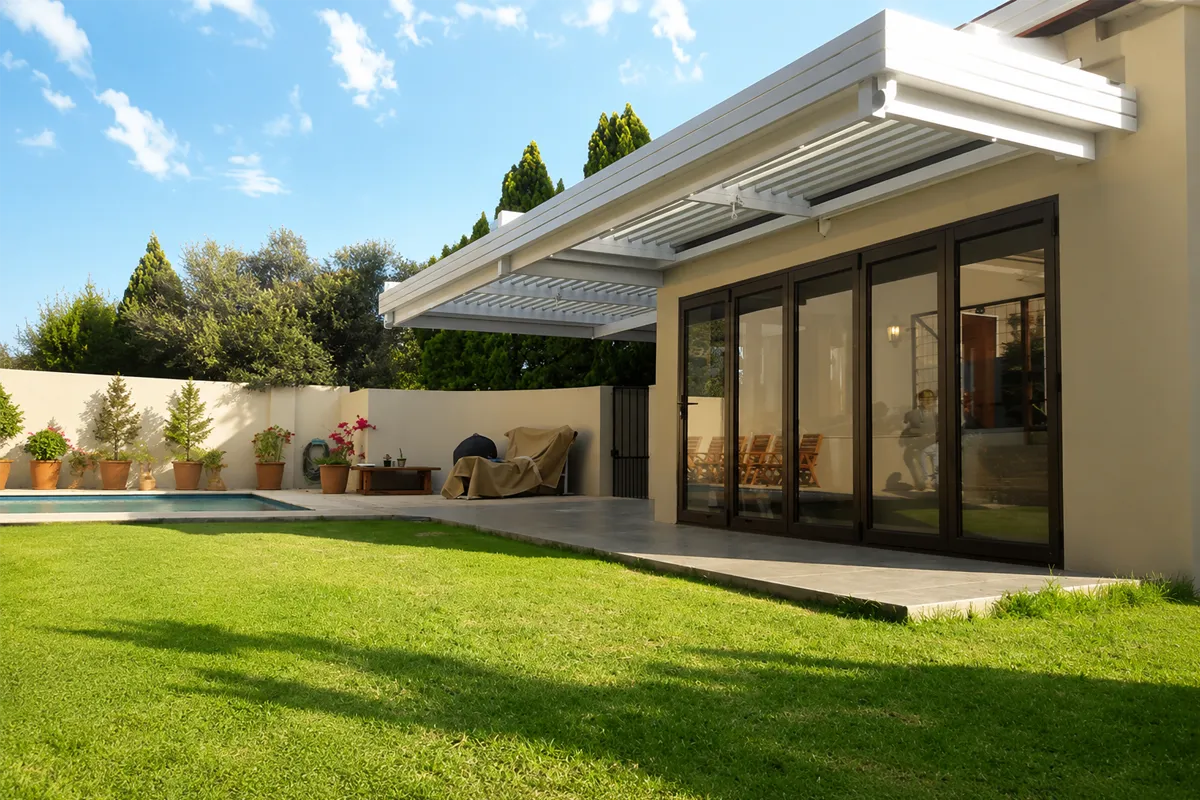
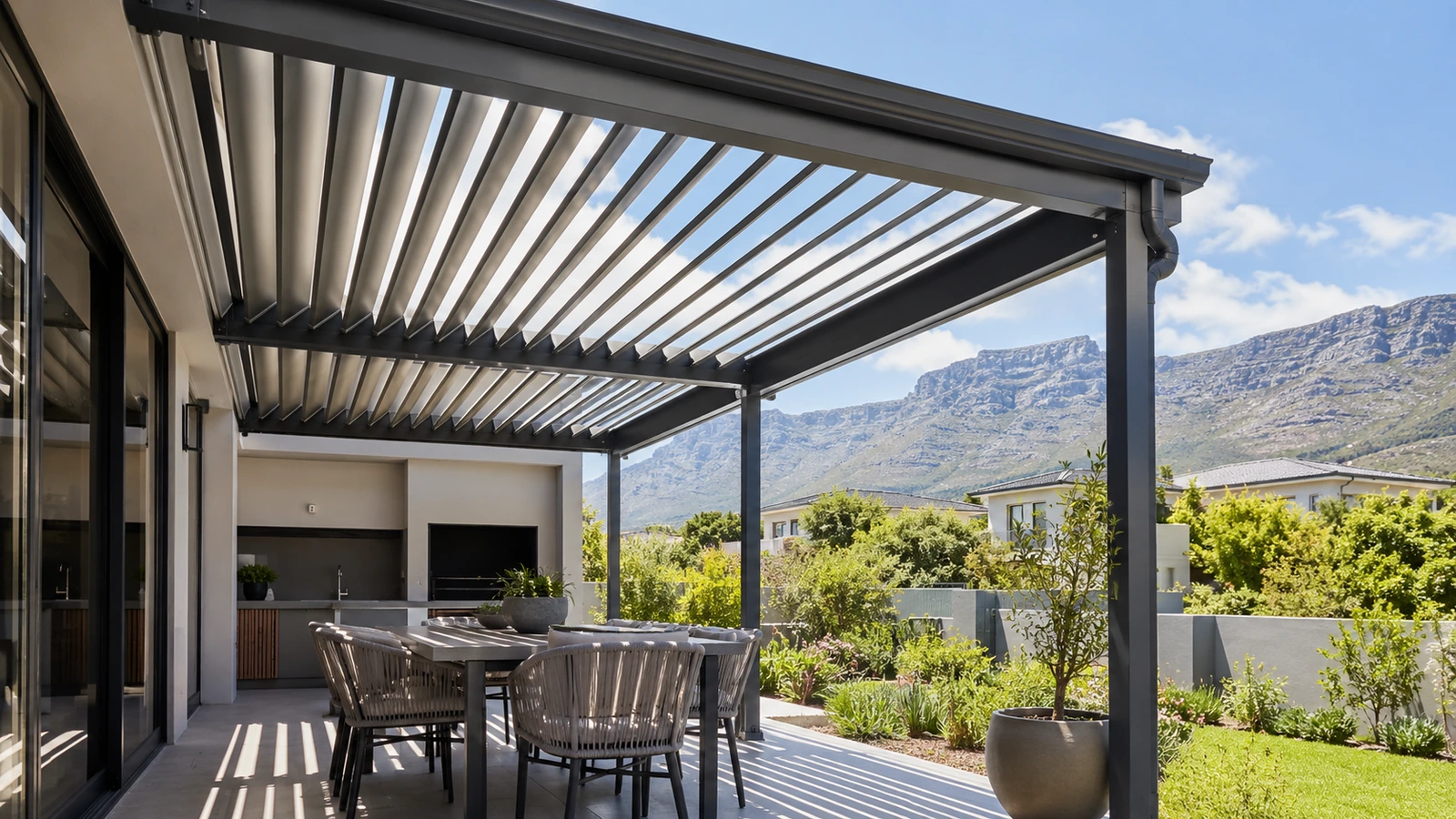
A louvre awning is a framed roof system with parallel blades that rotate to manage sunlight, ventilation and rain cover. It suits patios where conditions change throughout the day.
For a solution grounded in the actual property, explore adjustable aluminium louvre awnings. A useful project discussion should connect the intended use with dimensions, exposure, structure, drainage, finish and any required approvals.
How to judge a louvre roof system
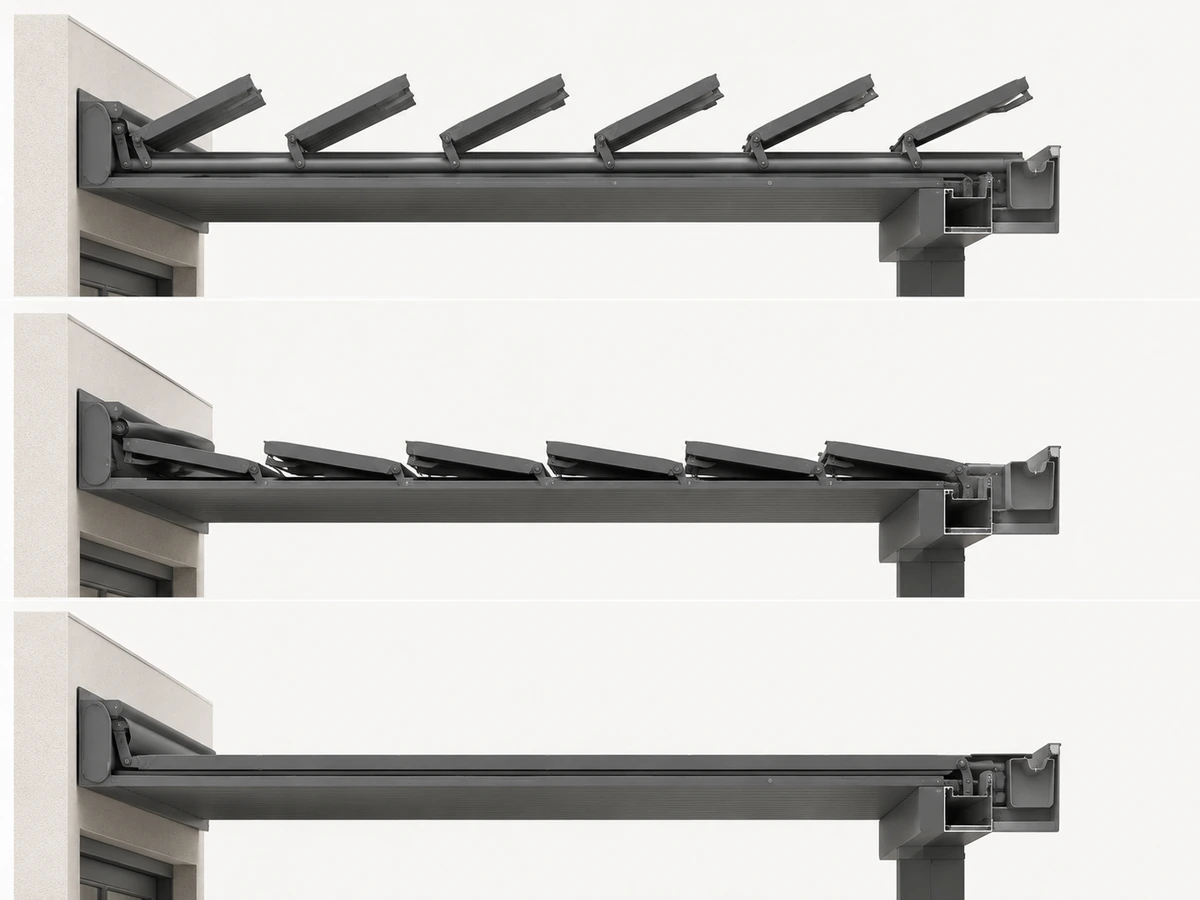
Start by checking blade movement and the useful open-to-closed range. Then consider water management when the blades are closed; together these factors show how the complete installation will perform in its intended position.
Blade movement and the useful open-to-closed range
Water management when the blades are closed
Support positions, spans and fixing conditions
Manual operation compared with motorised control
Before you specify blade direction and posts
Before requesting a quotation, record observe the sun at the patio during the hours it is used and confirm drainage routes before choosing post positions. These topic-specific details make proposals easier to compare and reduce assumptions.
- Observe the sun at the patio during the hours it is used
- Confirm drainage routes before choosing post positions
- Check estate rules and structural requirements early
- Compare the complete installed specification, not only the blade system
What to record before requesting a louvre quotation
Stand on the patio at the times you actually use it and note where the sun lands. Photograph the full area including the roofline you would fix to, then record approximate width, projection and the height available under the existing gutter. Mark where rainwater currently runs, because closed louvre blades collect water that has to be led somewhere deliberate.
Common Questions
What Is a Louvre Awning? FAQ
Do louvre awnings keep rain out when closed?
A closed louvre roof sheds rain, but it is only weather-tight if the blade seals and the gutter or beam drainage were specified for it. Ask specifically how water leaves the structure when the blades are shut — that detail, not the blade profile, decides whether the patio stays usable in a downpour.
Can louvre blades be left open in strong wind?
Open blades present more surface to the wind than closed ones. Manufacturers set an operating range for the system, and motorised installations are often paired with a wind sensor that closes the roof automatically. Confirm the intended behaviour in wind before ordering rather than after.
Is a louvre awning better than a solid patio roof?
Neither is better in the abstract. A louvre roof gives you adjustable light and ventilation, which suits a patio that must work in both winter and summer. A solid patio roof gives constant, predictable cover and usually costs less for the same footprint. Choose on whether adjustability is worth the extra mechanism.