Quick Answer
How does patio orientation change what you need?
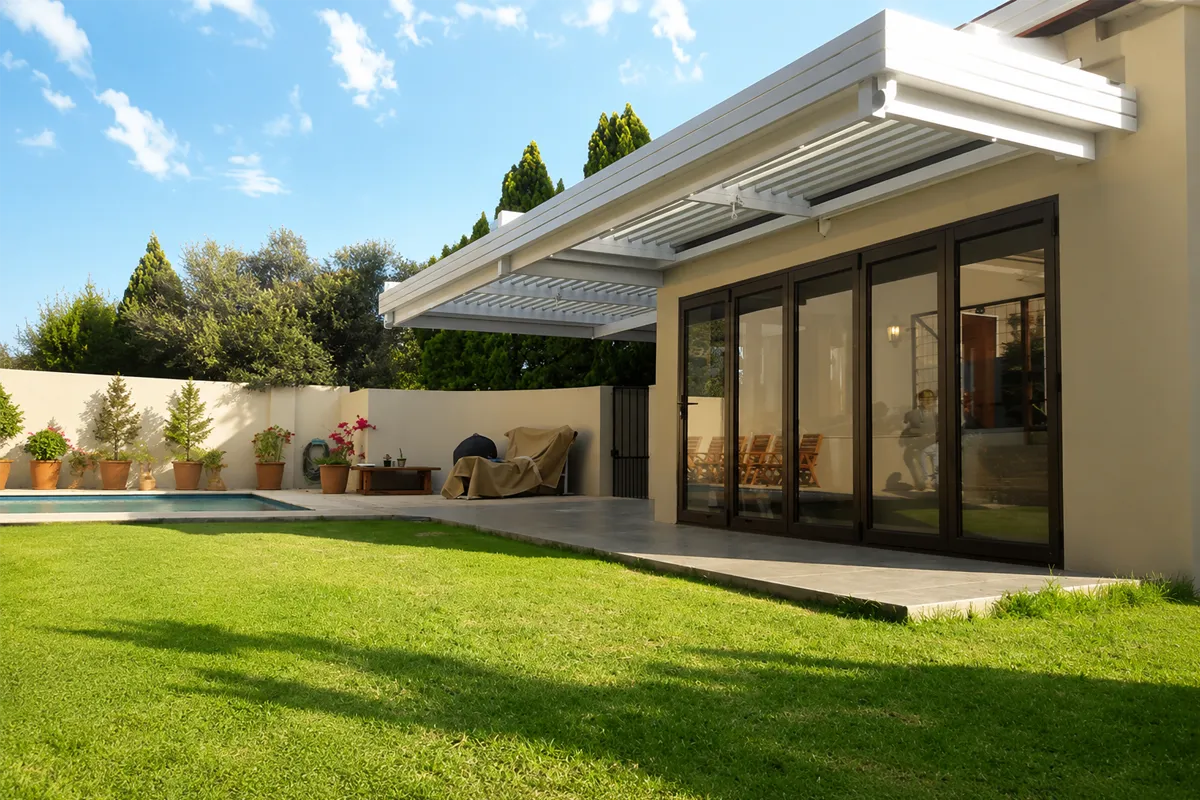
Roof orientation affects when direct sun reaches a patio and the rooms behind it. Overhead cover manages high sun, while screens, fins or deeper projection may be needed for low morning or afternoon sun.
For a solution grounded in the actual property, explore adjustable shade for changing sun angles. A useful project discussion should connect the intended use with dimensions, exposure, structure, drainage, finish and any required approvals.
North, west, east and south compared
Start by checking north, east, west or south-facing exposure. Then consider seasonal change in solar height; together these factors show how the complete installation will perform in its intended position.
North, east, west or south-facing exposure
Seasonal change in solar height
Low-angle glare from open patio sides
Indoor daylight and winter warmth
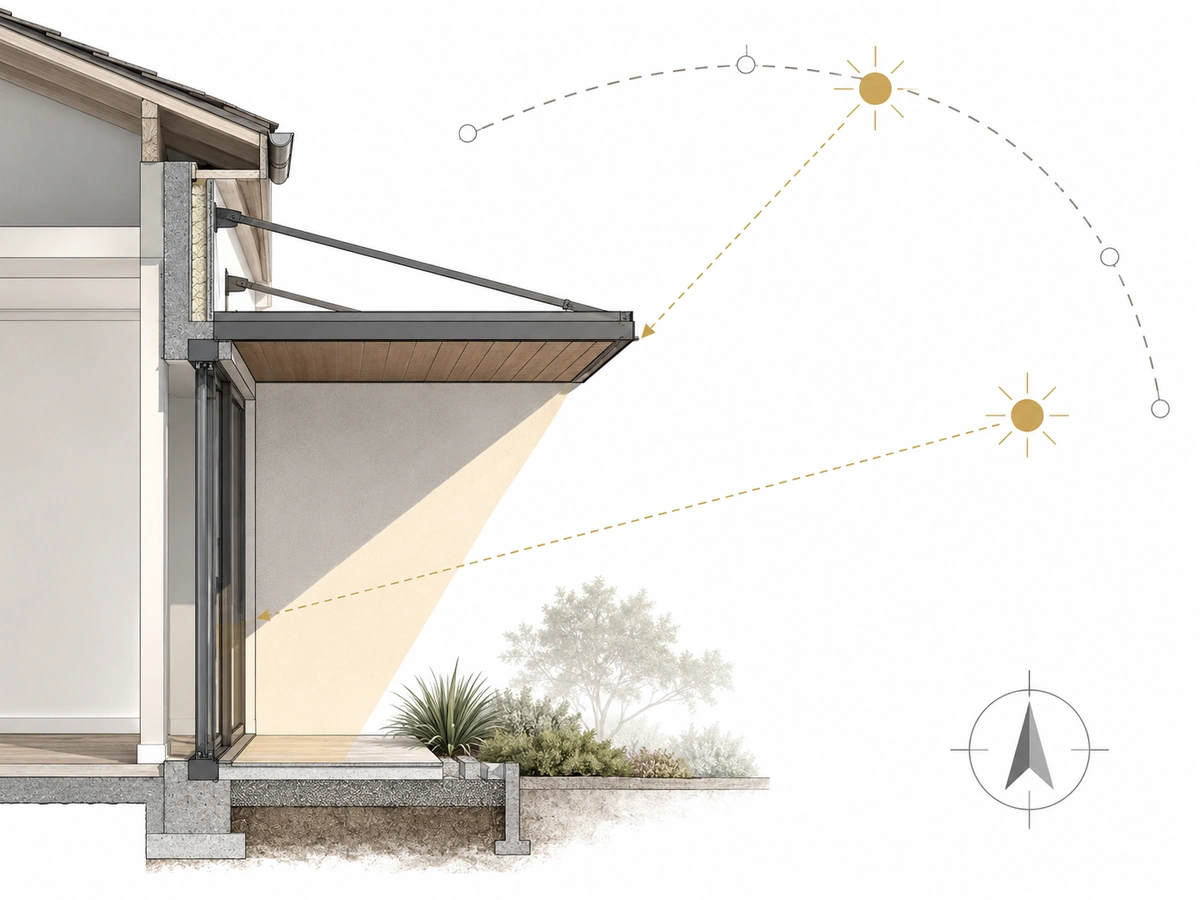
Designing for summer shade and winter sun
Before requesting a quotation, record photograph shadows at several times of day and mark the most important use hours. These topic-specific details make proposals easier to compare and reduce assumptions.
- Photograph shadows at several times of day
- Mark the most important use hours
- Avoid over-covering a room that needs winter light
- Combine overhead and side shading only where needed
Observing the space before specifying
Spend a day noting where the sun actually falls on the patio at the hours you use it, in the season that matters most to you. This costs nothing and is more reliable than any general rule, because trees, neighbouring buildings and the shape of the house all modify the theoretical sun path.
A related consideration is weather sensors and automation.
Common Questions
Sun Angles and Patio Orientation FAQ
Why is a north-facing patio easier to shade?
In the southern hemisphere the summer sun is high to the north at midday, so a horizontal roof or overhang intercepts it efficiently. The same overhang lets the lower winter sun in underneath — which is exactly the behaviour most people want.
Why is western sun so difficult?
Late-afternoon sun comes in low and almost horizontally, so it passes straight under a horizontal roof. Western exposure generally needs a vertical element — a blind, screen or side panel — rather than more overhead cover.
Does an adjustable roof solve orientation problems?
It helps considerably, because you can change the blade angle as the sun moves through the day and the seasons. It still does not defeat low western sun coming in horizontally, which is a geometry problem rather than a product problem.