
Quick Answer
What is the safe way to clean a fabric awning?
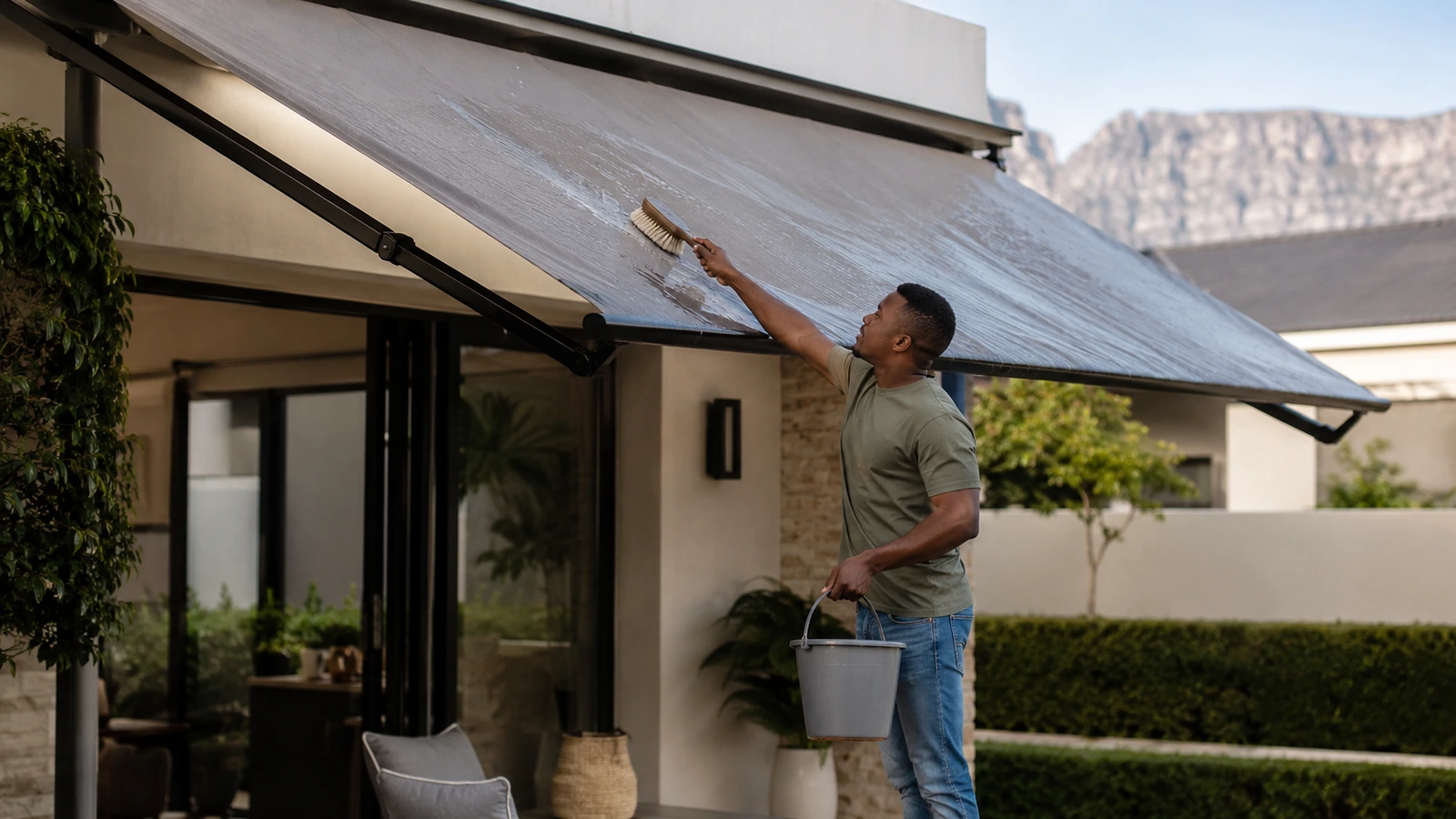
Fabric awnings benefit from regular dry brushing and gentle spot cleaning. Test products on a discreet area, avoid aggressive pressure washing and let fabric dry fully before prolonged retraction.
For a solution grounded in the actual property, explore fabric and window awning options. A useful project discussion should connect the intended use with dimensions, exposure, structure, drainage, finish and any required approvals.
Fabric type, cleaning agents and drying
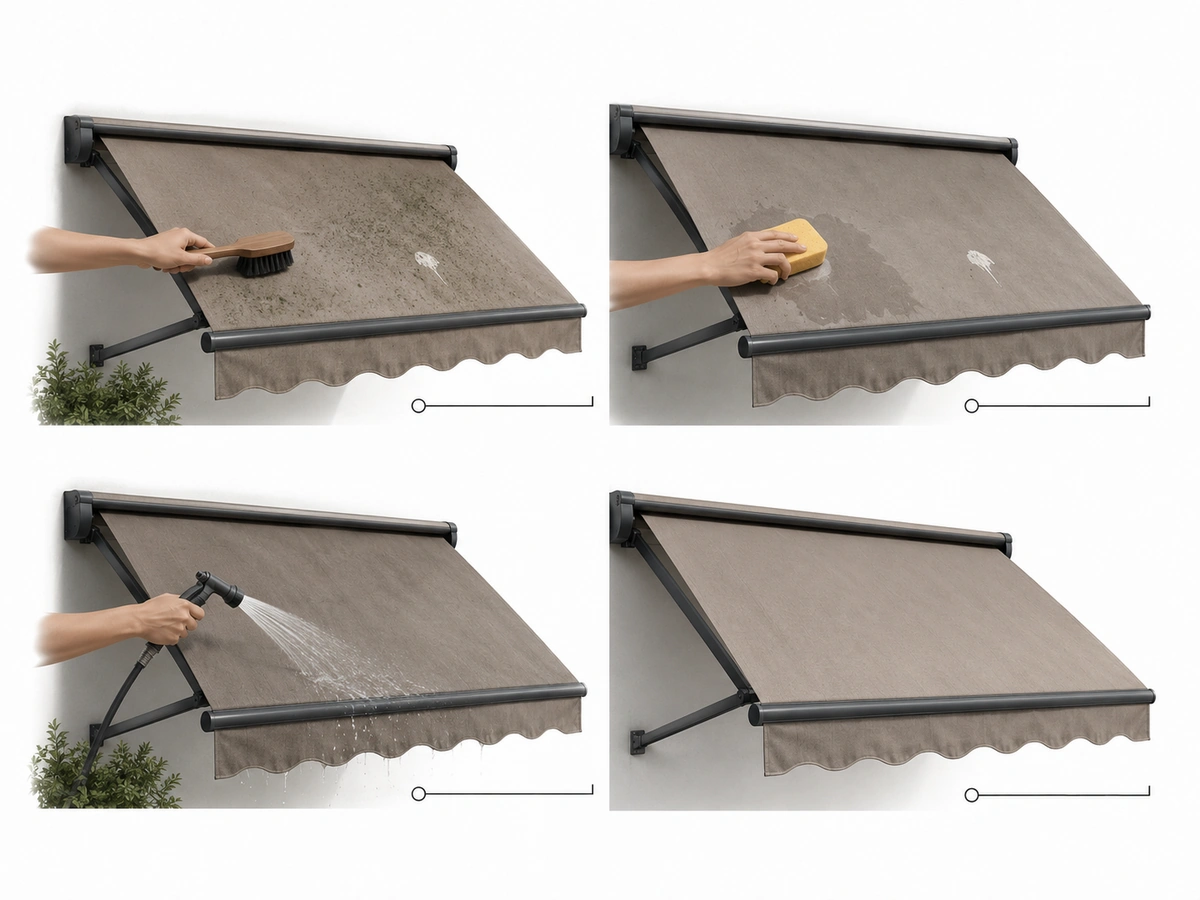
Start by checking check the fabric manufacturer's cleaning guidance. Then consider brush off loose dirt before wet cleaning; together these factors show how the complete installation will perform in its intended position.
Check the fabric manufacturer's cleaning guidance
Brush off loose dirt before wet cleaning
Use mild cleaner and cool or lukewarm water
Rinse and allow complete air drying
Dealing with mould, birds and tree debris
Before requesting a quotation, record treat stains early without hard scrubbing and avoid chlorine or solvents unless explicitly approved. These topic-specific details make proposals easier to compare and reduce assumptions.
- Treat stains early without hard scrubbing
- Avoid chlorine or solvents unless explicitly approved
- Clean the frame and fabric separately
- Inspect seams and tension while the awning is open
Step-by-step overview
- 1
Extend the awning and brush away loose debris.
- 2
Test a mild cleaning solution on a discreet area.
- 3
Clean gently with a soft brush or cloth.
- 4
Rinse until no residue remains.
- 5
Let the fabric dry completely before retracting it.
Cleaning without shortening the fabric's life
The single most important rule is to let the fabric dry fully extended before retracting it. Rolling away damp fabric is the most common cause of mould and staining, and it undoes the cleaning you have just done. Brush loose debris off dry before introducing any water.
Common Questions
How to Clean Fabric Awnings FAQ
Can I use bleach on an awning fabric?
Bleach can strip the water-repellent treatment and affect colour, so it should not be a first resort. Where mould is established, check what the fabric manufacturer recommends for that specific range — treatments that are safe on one fabric are not safe on all.
Why does mould keep coming back?
Usually because the fabric is being retracted while still damp, or because organic debris is sitting on it and holding moisture. Fixing the drying habit addresses the cause; repeated cleaning only addresses the symptom.
Does cleaning remove the water repellency?
Aggressive cleaning can. Repellent finishes wear over time in any case, and re-proofing products exist for many fabrics. Ask the supplier what is compatible with your specific fabric before applying anything.