
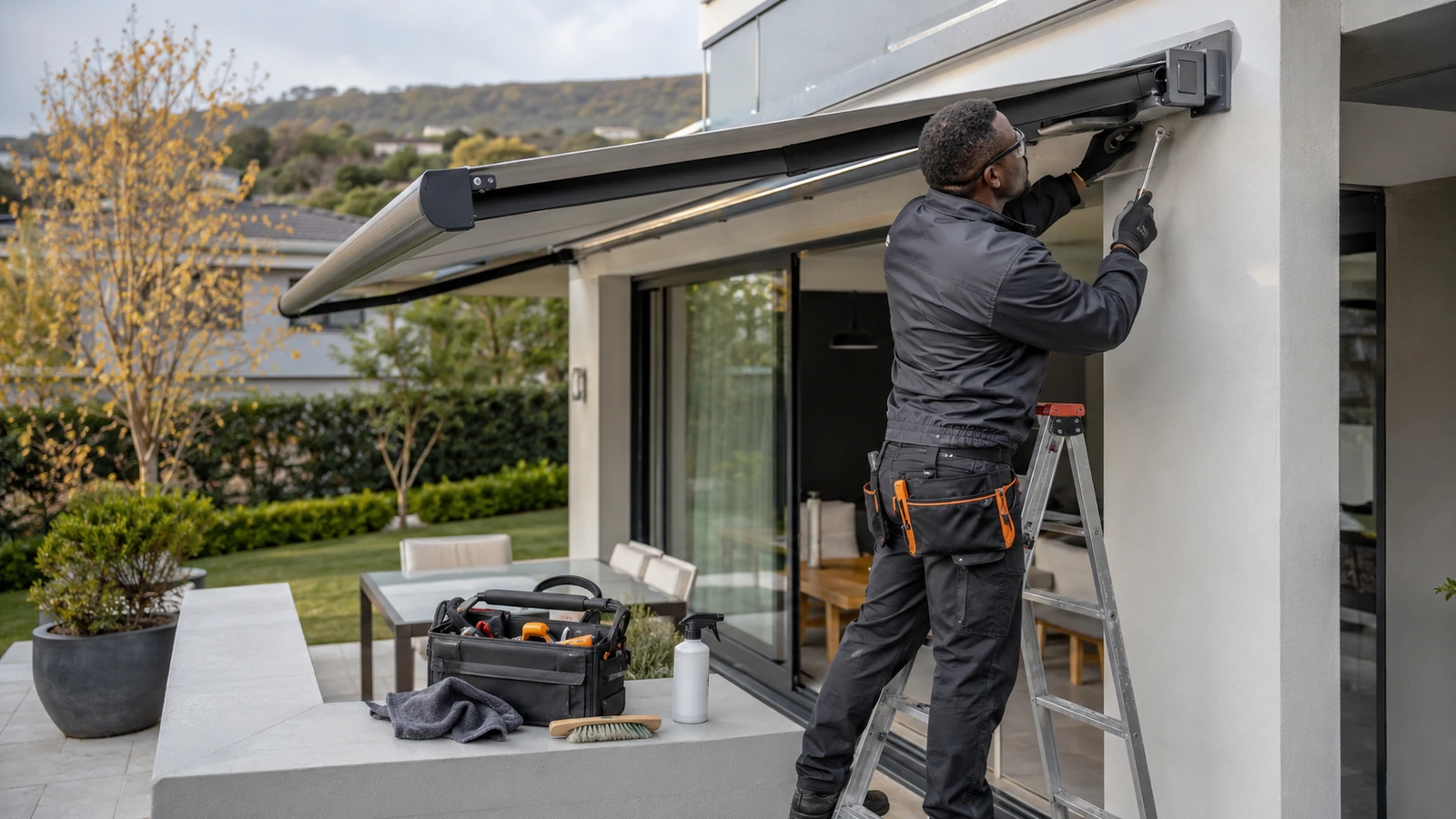
Quick Answer
What awning maintenance does each season need?
A short seasonal check should cover fixings, finish, moving parts, drainage, fabric, controls and changes to the surrounding building. Record anything unusual and arrange service before continued operation.
For a solution grounded in the actual property, explore awning support and guarantee information. A useful project discussion should connect the intended use with dimensions, exposure, structure, drainage, finish and any required approvals.
Pre-summer, storm season and winter checks
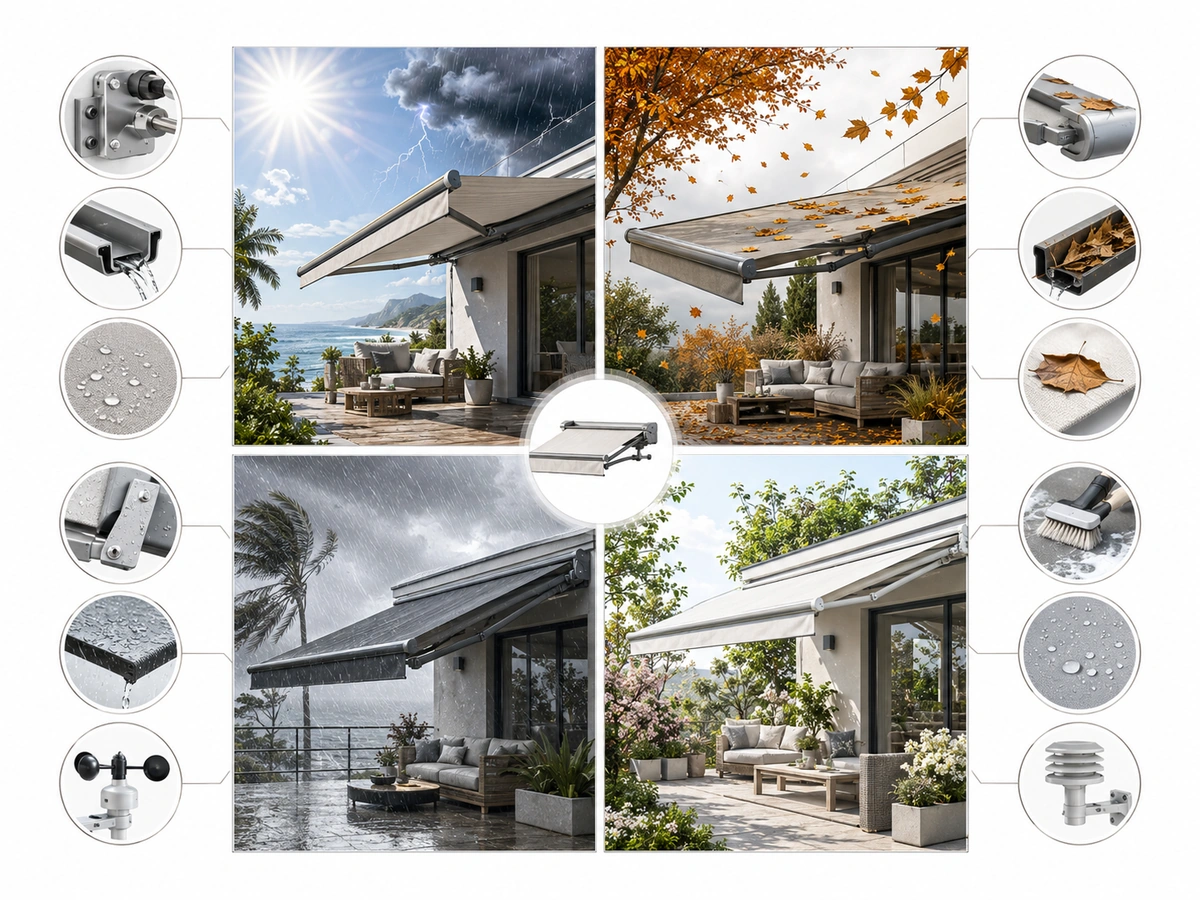
Start by checking clear gutters, channels and outlets. Then consider look for loose, damaged or corroded components; together these factors show how the complete installation will perform in its intended position.
Clear gutters, channels and outlets
Look for loose, damaged or corroded components
Check fabric tension, seams and edge wear
Operate the system while listening for new noise
Building a routine that actually gets done
Before requesting a quotation, record inspect after severe weather and trim vegetation away from moving parts. These topic-specific details make proposals easier to compare and reduce assumptions.
- Inspect after severe weather
- Trim vegetation away from moving parts
- Keep remote batteries and manuals accessible
- Photograph developing issues for comparison
The checks worth doing before storm season
The most valuable single moment for inspection on the Highveld is just before the summer storm season. Clearing gutters and outlets, checking fixings and confirming that any sensor or motor still responds correctly is far easier as preparation than as a repair in January.
Common Questions
Seasonal Awning Maintenance Checklist FAQ
When is the most important time to check an awning?
Before the summer storm season. Blocked drainage and loose fixings cause the most damage precisely when the weather is at its worst, and both are straightforward to deal with beforehand.
What should be checked on a motorised system seasonally?
That it runs through its full travel smoothly, that any wind or rain sensor still triggers, and that the manual override works if one is fitted. A sensor that has quietly stopped responding is only discovered when it was needed.
Do fixings need to be re-checked over time?
It is worth including them in a periodic visual check. Structures move slightly with thermal cycling and wind loading, and a fixing that has started to work loose is far cheaper to address early than after it has elongated its hole.