Quick Answer
What goes wrong with awnings, and what does it mean?
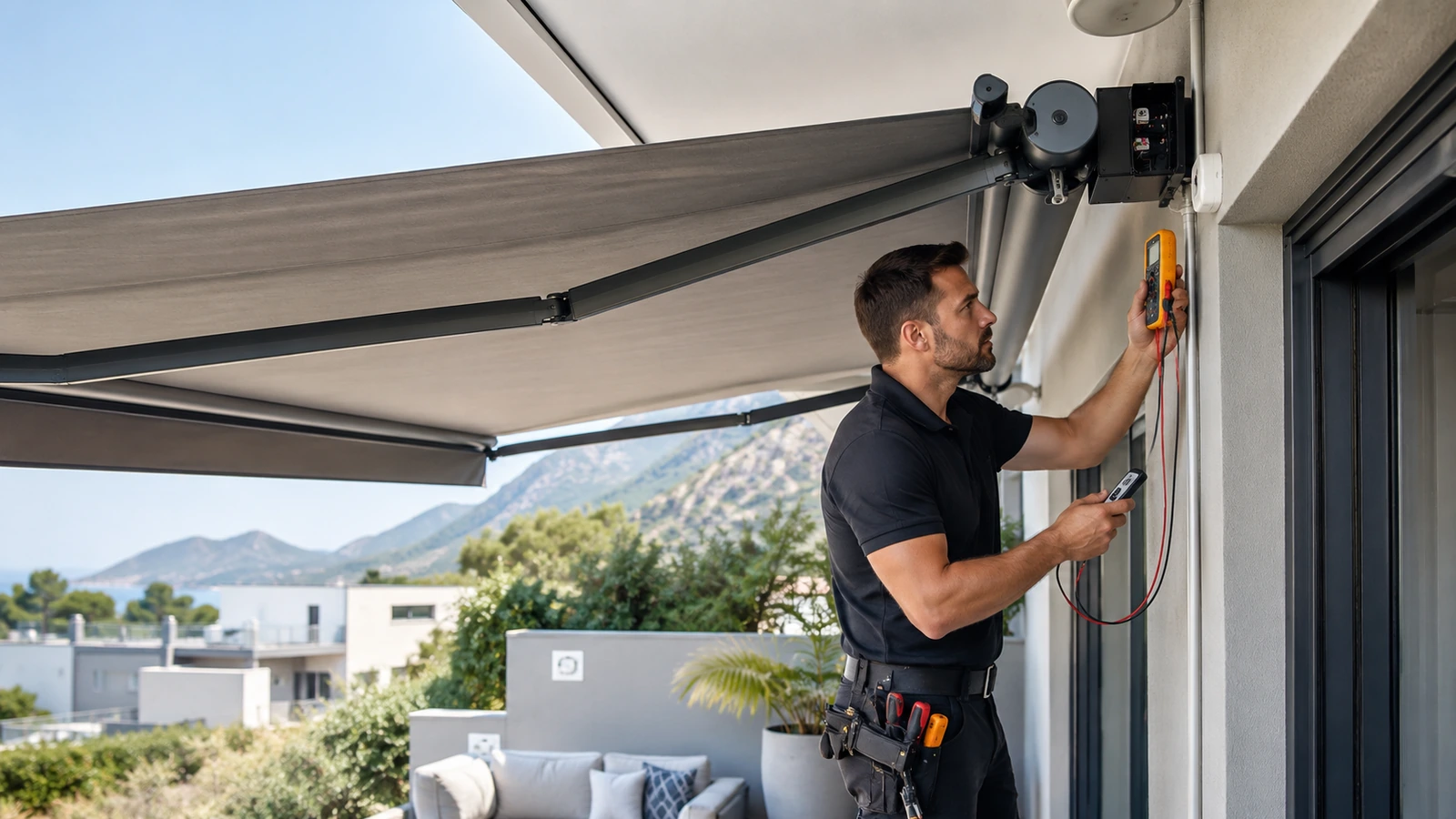
If an awning stops, moves unevenly or makes unusual noise, stop repeated operation. Basic checks can identify power or obstruction issues, but internal electrical and structural repairs belong with competent technicians.
For a solution grounded in the actual property, explore contact Dan-Neil about an awning concern. A useful project discussion should connect the intended use with dimensions, exposure, structure, drainage, finish and any required approvals.
Symptoms and their usual causes
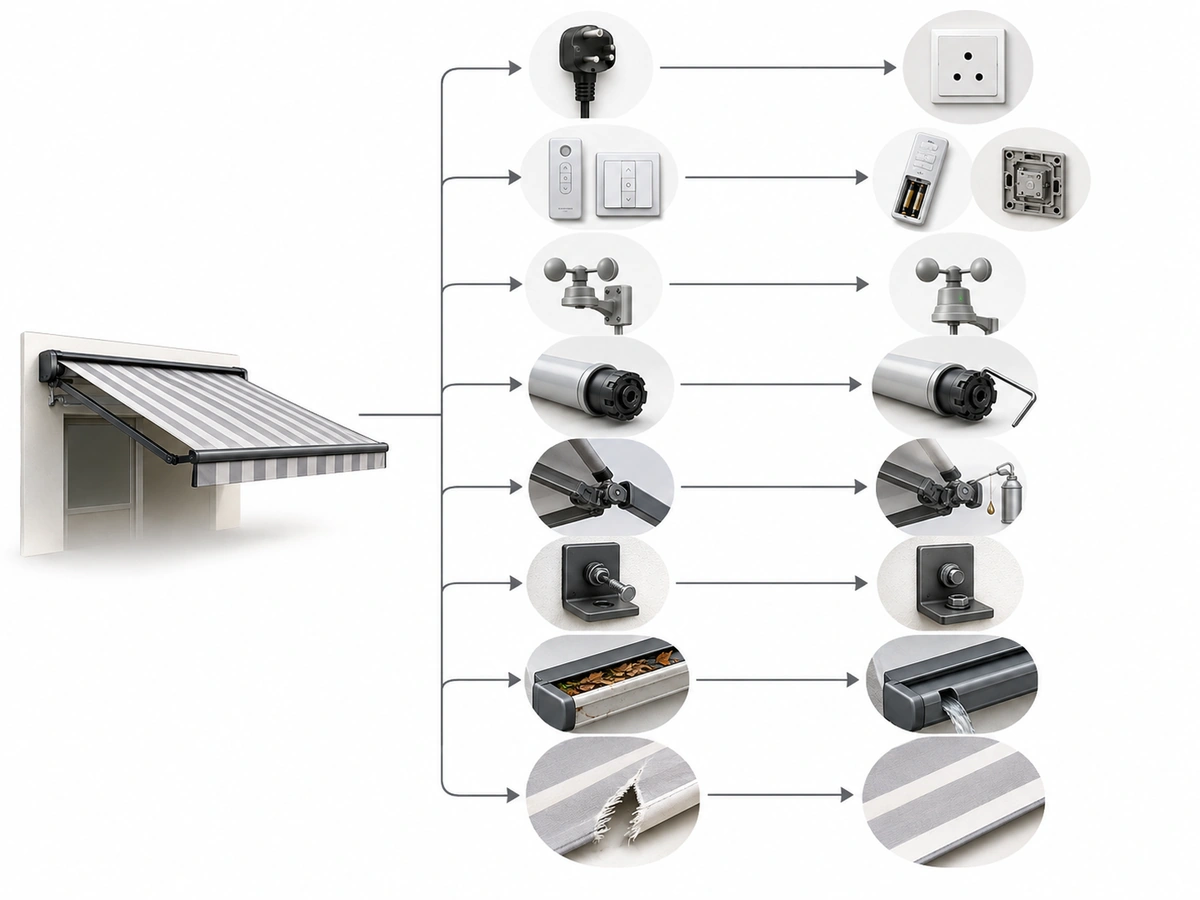
Start by checking check the supply, isolator and remote battery. Then consider look for visible debris or obstruction without dismantling; together these factors show how the complete installation will perform in its intended position.
Check the supply, isolator and remote battery
Look for visible debris or obstruction without dismantling
Note whether the fault affects one direction or all movement
Record sounds, position and recent weather
Diagnosing before calling anyone out
Before requesting a quotation, record do not force a stalled mechanism and do not open sealed electrical components. These topic-specific details make proposals easier to compare and reduce assumptions.
- Do not force a stalled mechanism
- Do not open sealed electrical components
- Keep people clear of unstable parts
- Share photographs and fault history with the service provider
Describing the fault so it can be fixed first time
When you report a fault, describe what the awning does rather than what you think is broken. Whether a motor hums without moving, moves partway and stops, or does nothing at all points to genuinely different causes, and that description often determines whether the right part arrives on the first visit.
Common Questions
Common Awning Faults and Repairs FAQ
My awning motor hums but nothing moves. What does that mean?
A motor that is energised but not driving usually points to an obstruction, a limit or gearing problem, or a failing capacitor, rather than to a dead motor. Stop operating it — repeated attempts against an obstruction can turn a small fault into a larger one — and describe the symptom precisely when you report it.
Water is pooling on my awning. Is that a fault?
Pooling usually means the fall has been lost or the drainage path is blocked, and it matters because standing water adds significant weight. Check the gutters and outlets first; if they are clear, the pitch or the structure needs attention.
The blades on my louvre roof have become noisy. Why?
Noise generally comes from debris in the pivots, worn bushes, or a linkage that has come out of adjustment. It is worth attending to early — continuing to operate a system that is binding accelerates wear on the mechanism.