Quick Answer
Should you repair an old awning or replace it?
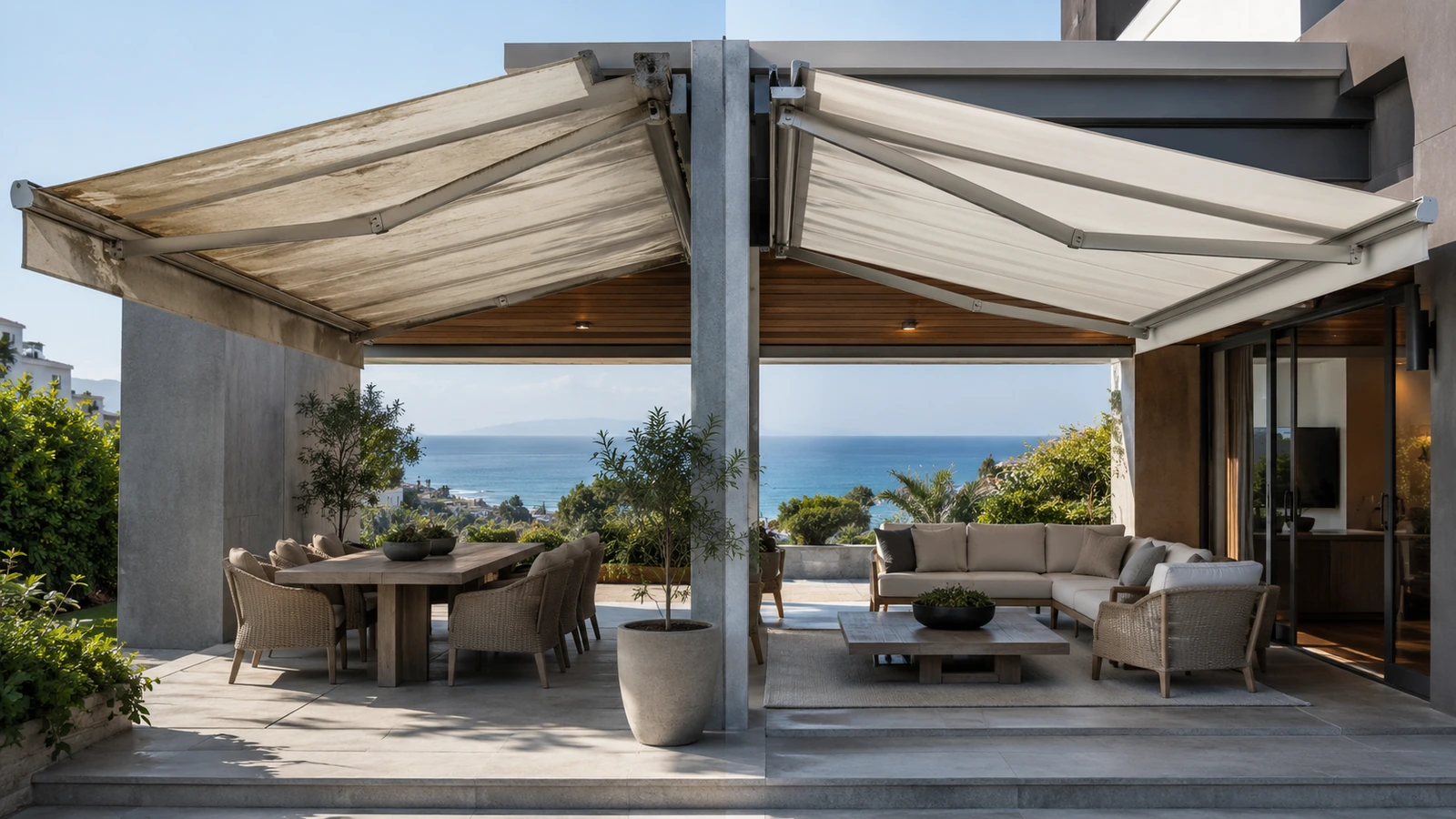
Repair is often sensible when damage is localised and compatible parts are available. Replacement becomes more practical when the structure, fabric, controls or compliance needs have changed substantially.
For a solution grounded in the actual property, explore request an assessment from Dan-Neil. A useful project discussion should connect the intended use with dimensions, exposure, structure, drainage, finish and any required approvals.
Structure condition versus component wear
Start by checking age and overall condition of the complete system. Then consider availability of compatible components; together these factors show how the complete installation will perform in its intended position.
Age and overall condition of the complete system
Availability of compatible components
Extent and cause of damage
Whether the current awning still suits the space
Working out what is actually failing
Before requesting a quotation, record ask for the fault cause, not only a replacement part and compare repair scope with a new-system warranty. These topic-specific details make proposals easier to compare and reduce assumptions.
- Ask for the fault cause, not only a replacement part
- Compare repair scope with a new-system warranty
- Consider repeated service history
- Do not retain unsafe structural components to save cost
Getting an honest assessment
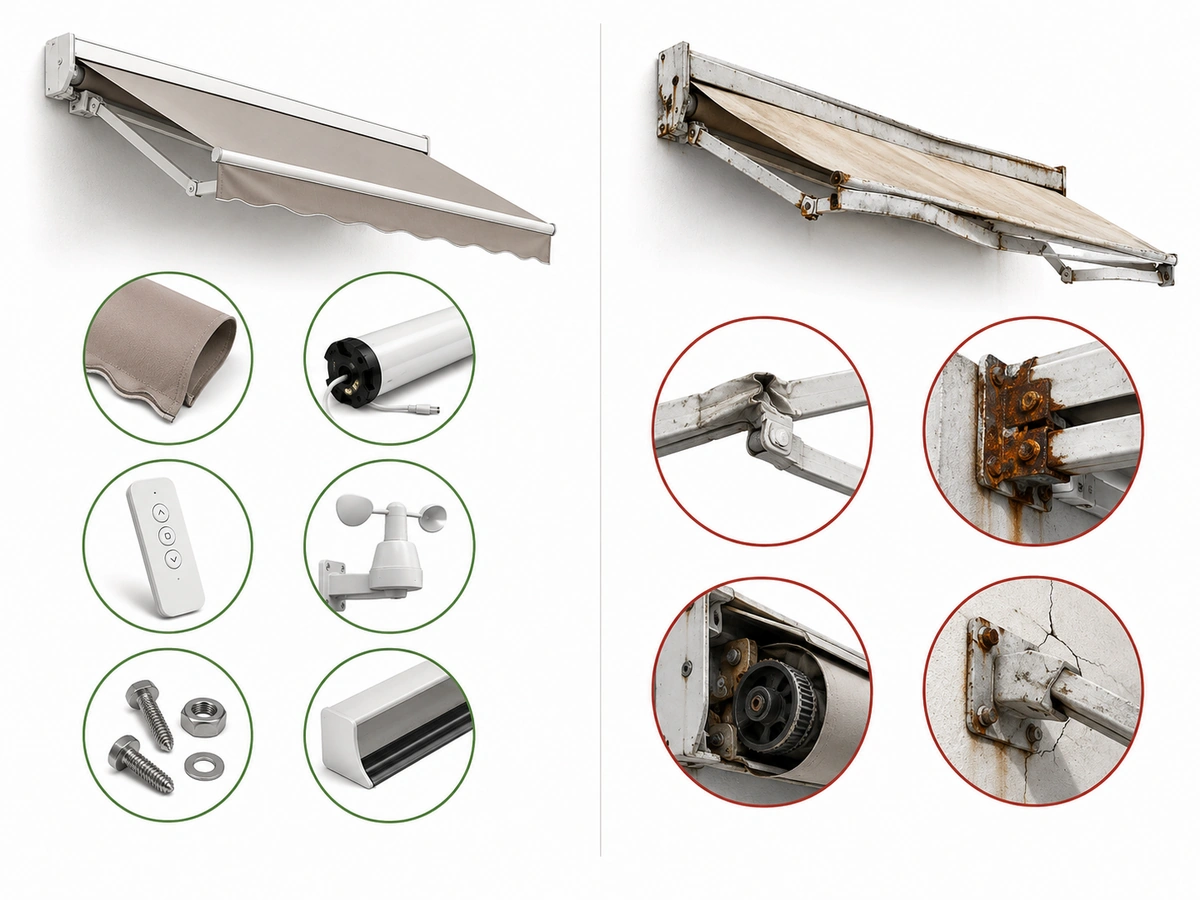
Separate the structure from the consumables before deciding. A sound frame with worn fabric, a tired motor or a failed finish is usually a repair proposition; corroded or deformed structure, failed fixings or an undersized frame is usually not. Ask an assessor to tell you which of the two you have.
Common Questions
Repair or Replace an Awning? FAQ
When is repair clearly the better option?
When the frame and fixings are sound and what has failed is a component designed to be replaced — fabric, a motor, a control, or a section of finish. Those are maintenance items, and replacing an entire structure because of them is rarely justified.
What makes replacement the more sensible choice?
Structural corrosion, deformed or fatigued members, fixings that have failed or lost their hold, or a structure that was undersized for the exposure it is in. Repairing around an underlying structural problem tends to buy a short reprieve at full cost.
Can parts still be obtained for an older system?
Sometimes, but proprietary components from discontinued ranges can be difficult to source. Availability of spares is a legitimate factor in the decision and is worth establishing before committing to a repair route.